
SSC পরীক্ষার সিলেবাসের একটি গুরুত্বপূর্ণ অধ্যায় Tag question। নবম-দশম শ্রেণির জন্য এই বিষয়টা খুবই গুরুত্বপূর্ণ। এছাড়া বিভিন্ন চাকরি, বিসিএসসহ যেকোনো প্রতিযোগিতামূলক পরীক্ষায় Tag question থেকে প্রশ্ন আসে। তাই এই বিষয়টা খুবই গুরুত্বের সাথে দেখা দরকার। এই আর্টিকেলে Tag Question Rules, কাকে বলে? কত প্রকার ও কী কী? এবং এর সবগুলো নিয়ম ও উদাহরণ নিয়ে বিস্তারিত আলোচনা করা হয়েছে। এই আর্টিকেলটা পড়লে Tag question নিয়ে আর কোনো সমস্যা থাকবে না।
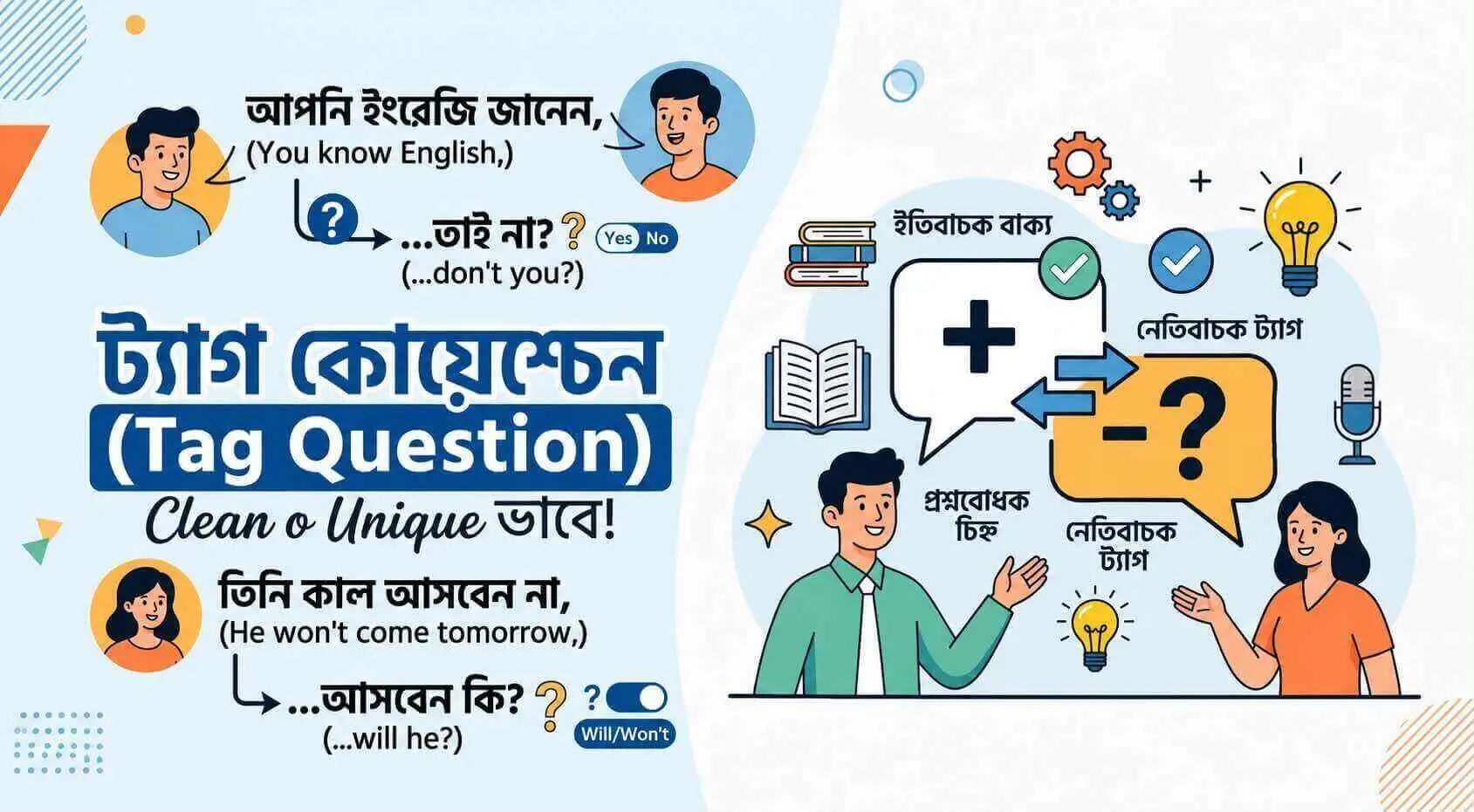
Tag question কাকে বলে?
কোনো Sentence এর সত্যতা নিশ্চিত করার জন্য সেই Sentence এর শেষ ছোট প্রশ্ন যোগ করা হয় তাহলে তাকে Tag question বলে। বাক্যের শেষ সেই বাক্য সম্পর্কে প্রশ্ন করাকে সহজ কথা Tag question বলে।
Tag question কত প্রকার?
বাক্যের উপর নির্ভর করে Tag question মূলত দুই প্রকার। Affirmative Tag ও Negative Tag।
Affirmative Tag
- মূল Sentence যখন না-বোধক Negative হয়, Tag question হ্যা-বোধক (Affirmative) হয়।
- উদাহরণ: He is not reading, is he?
Negative Tag
- মূল Sentence যখন হ্যা-বোধক Affirmative হয়, তখন Tag question না-বোধক Negative হয়।
- উদাহরণ: You are married, aren’t you?
Important Tag Question Rules
Rule 1
A. Left side Affirmative হলে Right side Negative হবে।
- You are Happy, aren’t you?
B. Left side Negative হলে Right side Affirmative হবে।
- He is not eating, is he?
C. Left and Right উভয় side এর Tense একই হবে।
D. প্রথম অংশ Auxiliary verb থাকলে Tag question এও সেই Auxiliary verb বসবে, কিন্তু Auxiliary verb না থাকলে Tense অনুযায়ী do, did, does বসবে।
- We play cricket, don’t we?
E. প্রথম অংশের subject এর Number/Person অনুযায়ী Tag question এ Subjective Pronoun বসবে।
F. প্রতিটা Tag question এর শেষে অবশ্যই জিজ্ঞাসা চিহ্ন (?) ব্যবহার করতে হবে।
Rule 2
Sentence এর প্রথম অংশে Auxiliary verb থাকেল সেটা বসিয়ে তার সাথে not যোগ করতে হবে। আর যদি Negative Sentence থাকে তাহলে Not তুলে দিতে হবে। তালিকার মাধ্যমে তুলে ধরা হল
| Auxiliary Verb | Negative Form |
| am | am not |
| is | isn’t |
| are | aren’t |
| was | wasn’t |
| were | weren’t |
| do | don’t |
| does | doesn’t |
| did | didn’t |
| have | haven’t |
| has | hasn’t |
| had | hadn’t |
| will | won’t |
| shall | shan’t |
| would | wouldn’t |
| should | shouldn’t |
| can | can’t |
| could | couldn’t |
| may | may not |
| might | mightn’t |
| must | mustn’t |
| need | needn’t |
| dare | daren’t |
| ought to | oughtn’t to |
| used to | usedn’t to / didn’t use to |
উদাহরণ
- I am busy, aren’t I?
- He is very smart, isn’t he?
Have, has, had যদি Present Perfect বা Past Perfect Tense-এ Auxiliary Verb হিসেবে ব্যবহৃত হয়, তাহলে Tag Question-এ যথাক্রমে haven’t, hasn’t, hadn’t বসে।
উদাহরণ:
- Sohag has been to Bangladesh, hasn’t he?
- They have finished the work, haven’t they?
কিন্তু have, has, had যদি মূল Verb (Main Verb) হিসেবে ব্যবহৃত হয় (অর্থাৎ possession বা obligation বোঝায়), তাহলে Tag Question-এ do, does, did ব্যবহৃত হয়।
উদাহরণ:
- He has a car, doesn’t he?
- They have a beautiful house, don’t they?
Rule 3
Main verb এর ক্ষেত্রে Tag question করতে হলে Tense ও person অনুযায়ী do, did, does বসে। অর্থাৎ যে Sentence এ কোন Auxiliary বা Modal Auxiliary verb থাকে না সেই Sentence এ Tense ও person অনুযায়ী do, did, does বসবে। যেমন:
- Sohag goes to university, doesn’t he?
- We play badminton, don’t we?
- He plays cricket, doesn’t he?
Rule 4
Imperative Sentence এ Let’s বা Let us দিয়ে যখন প্রস্তাব বুঝায় তখন Tag question করার সময় shall + we বসবে। যেমন:
- Let’s play a football match, shall we?
- Let’s start the game, shall we?
Rule 5
Imperative Sentence এ যদি Let’s না থাকে এবং এটা যাদি Affirmative Sentence হয় তাহলে Tag question এ will, won’t, can, can’t, would, could এর যেকোনো একটি বসবে এবং Subject সবসময় you হবে। যেমন:
| Close the door, | will you? |
| won’t you? | |
| can you? | |
| can’t you? | |
| would you? | |
| could you? |
Rule 6
Imperative Sentence টি যদি Negative বা না বাচক হয় তাহলে Tag question করার will you?, can you?, অথবা could you? ব্যবহৃত হয়
- Don’t do it, will you/can you?
Rule 7
কোনো Sentence এ যদি নিচের এই Negative word গুলো থাকে তাহলে Tag question টি Affirmative বা হ্যাঁ বাচক হবে। যেমন:
neither, no, none, no one, nobody, nothing, scarcely, hardly, barely, seldom, hardly ever, little, few, etc.
- There’s little we can do about it, is there?
Rule 8
কোন sentence-এ যদি verb-এর contraction form (He’s, He’d) ব্যবহৃত হয় তাহলে main verb-এর form দেখে tense নির্ণয় করতে হবে এবং সে অনুযায়ী Tag question-এ verb বসবে। যেমন:
- He’s reading now, isn’t he?
- He’s worked a lot, hasn’t he?
- He’d go there, wouldn’t he?
- He’d gone there, hadn’t he?
(i) ‘s + [verb + ing] হলে ‘s দ্বারা is বুঝাবে।
(ii) ‘s+V’ (Past Participle) হলে ‘s দ্বারা has বুঝাবে।
(iii) ‘d + V’ (Present form) হলে ‘d দ্বারা would বুঝাবে।
(iv) ‘d+ V³ (Past Participle) হলে ‘d দ্বারা had বুঝাবে।
Examples:
- She’s doing her best, isn’t she?
- She’s done her best, hasn’t she?
Rule 9
Complex Sentence-এর ক্ষেত্রে Principal Clause-এর subject এবং verb অনুসারে Tag question-এ verb ও pronoun বসবে। যেমন:
- He said that you were not here, didn’t he?
Rule 10
Sentence এর subject অনুযায়ী Tag question এ Pronoun এর Subjective form বসবে। ছকের মাধ্যমে তুলে ধরা হল
| Sentence এর subject | Tag question এ Pronoun এর Subjective form |
| It, something, anything, everything, nothing | it |
| No one, nobody, none, neither | they |
| Every one, everybody, someone, somebody | they |
| Let’s / let us | (shall) we |
| There | there |
- Something is wrong, isn’t it?
- Something is better than nothing, isn’t it?
- Somebody wanted a drink, didn’t they?
- There’s little we can do about it, is there?
FAQ
Q: Tag Question কী?
A: Tag Question হলো একটি ছোট প্রশ্ন, যা একটি বাক্যের শেষে যোগ করা হয় বক্তার বক্তব্য নিশ্চিত করার জন্য বা সম্মতি পাওয়ার উদ্দেশ্যে।
Q: Positive sentence-এর Tag Question কী হবে?
A: Positive sentence-এর শেষে সাধারণত Negative Tag Question বসে।
Q: Negative sentence-এর Tag Question কী হবে?
A: Negative sentence-এর শেষে সাধারণত Positive Tag Questionবসে।
Q: Imperative sentence-এর Tag Question কীভাবে গঠন করা হয়?
A: সাধারণত Imperative sentence-এর শেষে will you?, won’t you?, can you?, বা could you? ব্যবহৃত হয়, বাক্যের অর্থ অনুযায়ী।
Q: ‘Let’s’ দিয়ে শুরু হওয়া বাক্যের Tag Question কী হবে?
A: Let’s দিয়ে শুরু হওয়া বাক্যের শেষে shall we? বসে। যেমন:
Read More
- Noun Classification সম্পর্কে জানতে পড়ুন
- Pronoun কত প্রকার জানতে পড়ুন
- Subject-Verb Agreement সহজ নিয়ম,ব্যবহার ও উদাহরণ
- Appropriate preposition
- Voice change
- Narration: এর সহজ নিয়ম, ব্যাখ্যা ও উদাহরণসহ বিস্তারিত আলোচনা
- Transformation of Sentence: কত প্রকার ও কি কি উদাহরণসহ
- Verb কত প্রকার ও কী কী? Best 15 টি সহজ নিয়ম ও উদাহরণ
- Number কি, কত প্রকার: best 20 টি Number চেনার সহজ উপায়
- Gender কত প্রকার ও কি কি? Best 10 টি চেনার সহজ নিয়ম
- Determiners কাকে বলে? কত প্রকার ও কী কী Best 10
- Degree কাকে বলে? কত প্রকার, Best 10টি Degreeপরিবর্তনের নিয়ম
- Adverb কাকে বলে? কত প্রকার, Best 10 টি Adverb চেনার নিয়ম

Md Oliur Rahman Sohag বাংলা সাহিত্য, বাংলা ব্যাকরণ, কবি-সাহিত্যিক জীবনী এবং শিক্ষামূলক বিষয় নিয়ে লেখালেখি করেন। তিনি Study Journal X-এর প্রতিষ্ঠাতা ও প্রধান কনটেন্ট লেখক।